




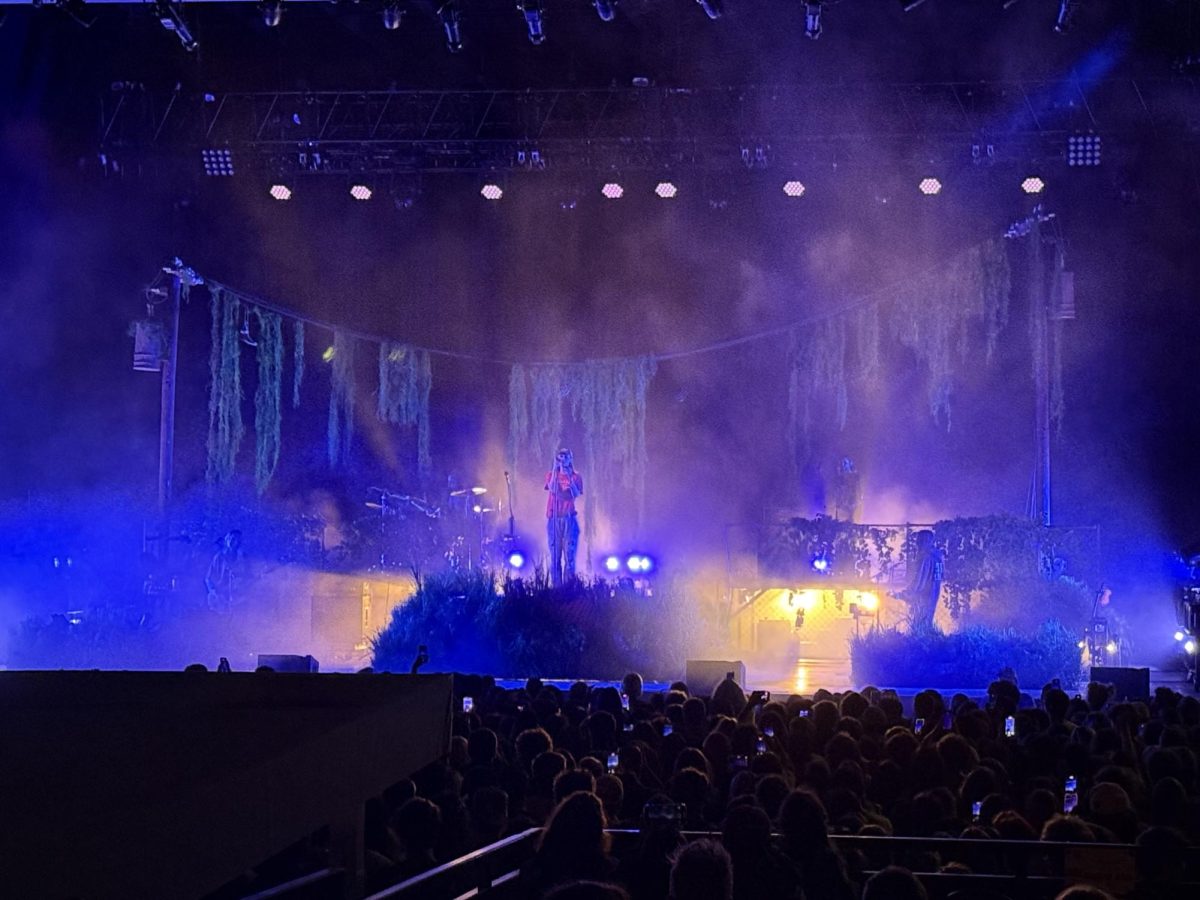



















The question Noah Kahan undoubtedly asked himself when producing “The Great Divide” was, what do you do when everything changes?
Everything changed for Kahan after the release of his most recent album, “Stick Season,” in October 2022. The hit album resulted in fame and recognition, earning him platinum records and a Grammy nomination. However, despite his popularity, Kahan has remained connected to his roots, a theme strongly portrayed in “The Great Divide.”
Across 17 tracks, Kahan explores topics of self-reflection, interpersonal relationships and his home state of Vermont. He grapples with the challenge of internal disconnect after his sudden rise to fame, emphasizing the paradox between being seen by millions and experiencing alienation from himself.
The first track, “End of August,” focuses on how Kahan’s heart will always remain in Vermont. The song is ambient and has bittersweet lyrics, such as “we’re a drawing of a place, we’re a photo on the fridge.” Kahan’s soul is still rooted in the soil of his birthplace, but he must also grapple with the reality of being a famous musician. “End of August” is the perfect opener for “The Great Divide,” as it sets the scene that the rest of the album expands upon.
While “Stick Season” mostly unveils Kahan’s inner beliefs and feelings, “The Great Divide” offers a look into the perspective of Kahan’s loved ones. It also creates nuanced feelings of intrigue and pity due to the extreme anxiety and depression Kahan feels. In “Porch Light,” Kahan sings “I hope you tell me that you’re winding down, that you lost the taste to face the crowd, that whatever made you famous made you sick.” Kahan is addressing the unspoken wishes of those closest to him: they are quietly hoping he will quit music and return to his healthier, happier self.
Another major topic Kahan focuses on within “The Great Divide” is the depression and anxieties that come with being famous. Because of these melancholy themes, “The Great Divide” carries heavier emotional weight than “Stick Season,” giving it much more depth and sentimental value.
Although I wasn’t keen on “Porch Light” upon my first listen, I eventually was drawn to its early 2010s, folktronica feel and gut-wrenching lyrics. I interpreted the song as a stubborn yet caring refusal to move on, even though the person you’re relying on won’t come back or ever be the same.
On the other hand, “23” falls flat. The song lacks an emotional bridge, and I found myself bored while listening to it. The song is extremely depressing, and while other songs have a resolution, this one is heartbreaking all the way through.
Despite its melancholic themes, this album is the perfect soundtrack for a long drive, as its tempos and rhythms have a persistent, forward momentum. The message of the song “Downfall,” for example, is Kahan’s own selfish yet relatable hope that a loved one’s search for a new love will fail so they can return home to him.
Kahan’s new album hones in on heavy themes and uses clever imagery to describe his complex emotions toward his hometown and current reality. Kahan’s hesitance to grow amidst pain and his deep connection to Vermont represent how difficult change can be, which is a universal experience.
Published and digitized May 2026.