






















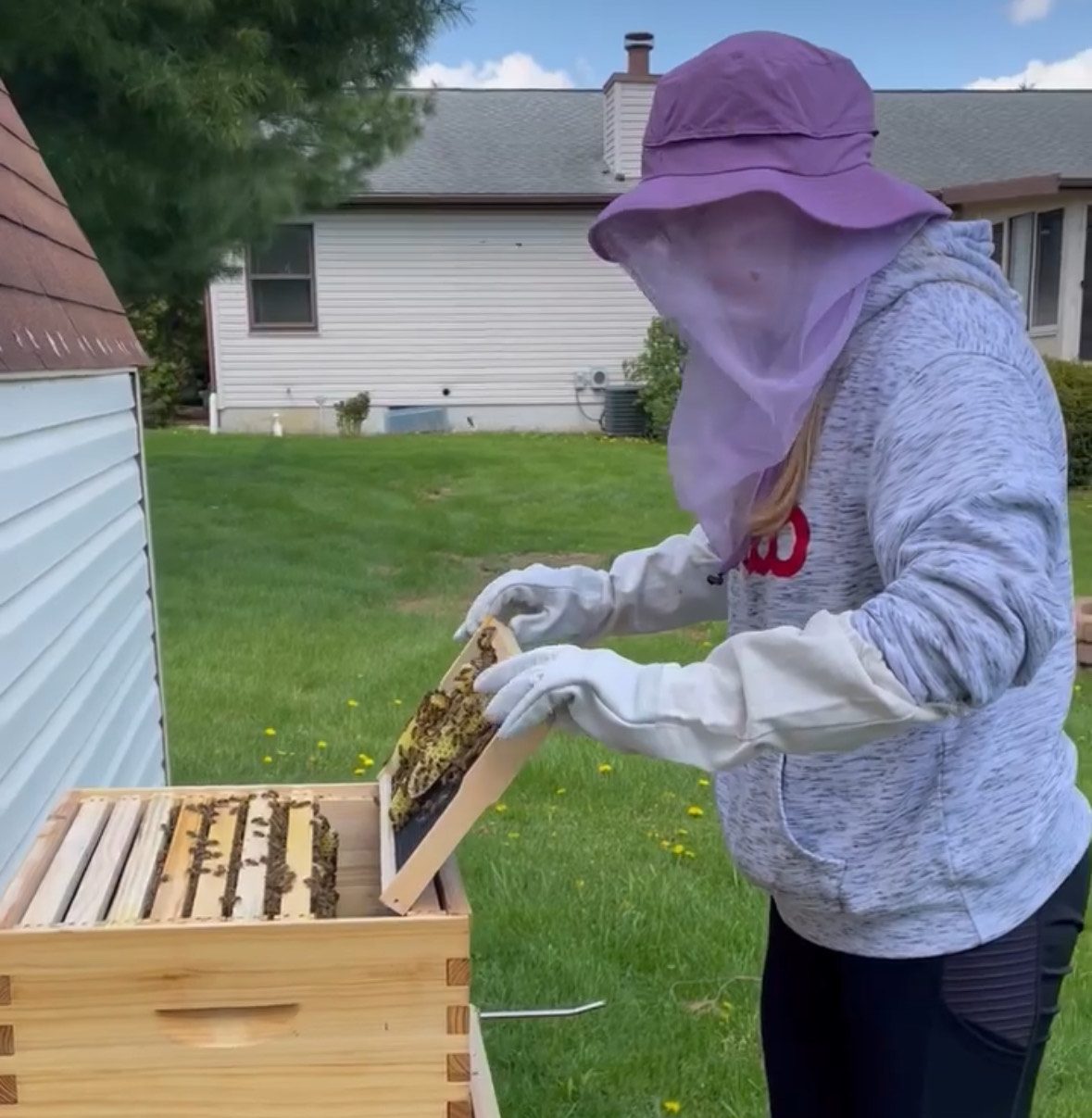
During the day, she’s teaching algebra and geometry to high school students, explaining proofs, factoring and functions. In the evening and on weekends, however, math teacher Jennifer Kirk dons a thick white mask, trading quizzes and test papers for the hundreds of bees she must monitor in order for them to survive in the seasons ahead.
Kirk said she and her husband have kept one hive, and are somewhat novices. She explained the bees of her previous hive died last winter due to predators.
Kirk said she first became interested in beekeeping while chaperoning a school trip to Washington, D.C. where she learned George Washington was a beekeeper, she said.
Beekeepers are essential in providing pollination services for agriculture, Kirk said.
“Within 10 months, if there were no more bees, we wouldn’t have natural occurring fruit or vegetables,” she explained.
Kirk said she is focused on maintaining a single hive rather than making a profit so that she can maintain the wellbeing of the bees instead of worrying about honey and other items bees produce.
“I don’t care about having honey,” Kirk said. “If it works out that there’s so much that I have to take honey, then I will.”
Although bees have the ability to sting, Kirk explained it is not their natural inclination.
“Honey bees do not want to sting you,” Kirk said. “They are not yellow jackets or wasps. Once they do, they die.”
Bees are much more delicate than perceived, and pesticides and severe weather can be dangerous for bee hives, Kirk said. She explained she lost her first hive to another unexpected threat.
“I lost my one hive before winter because yellow jackets got in and they got my queen,” she said. “I unwrapped my hive from winter and everybody, all the bees, were gone.”
Kirk said she has also learned about various predators of bees, such as skunks. Skunks are nocturnal, Kirk explained, so they scratch on the hive at night, forcing the bees to come out and be eaten.
Kirk said the hardest part of beekeeping is not knowing what to do when her bees are in danger.
“Figuring out how to keep skunks out of my hive and the whole predator situation I wasn’t prepared for,” she said. “Sometimes you don’t know what to expect.’”
Kirk explained some beekeepers use specific methods to keep hive populations from declining, such as asking neighbors not to use pesticides.
Since being a beekeeper with a full-time job can be challenging, Kirk said she has enlisted her husband’s support.
“Once he started doing it, he got very interested,” she said. “Now he is excited to have them again.”
Although beekeeping can be stressful, Kirk explained she enjoys it.
“I’m really just in it for the bees,” she said. “You learn to care about them, and in the end, it’s about keeping them alive.”
Published and digitized October 2025