
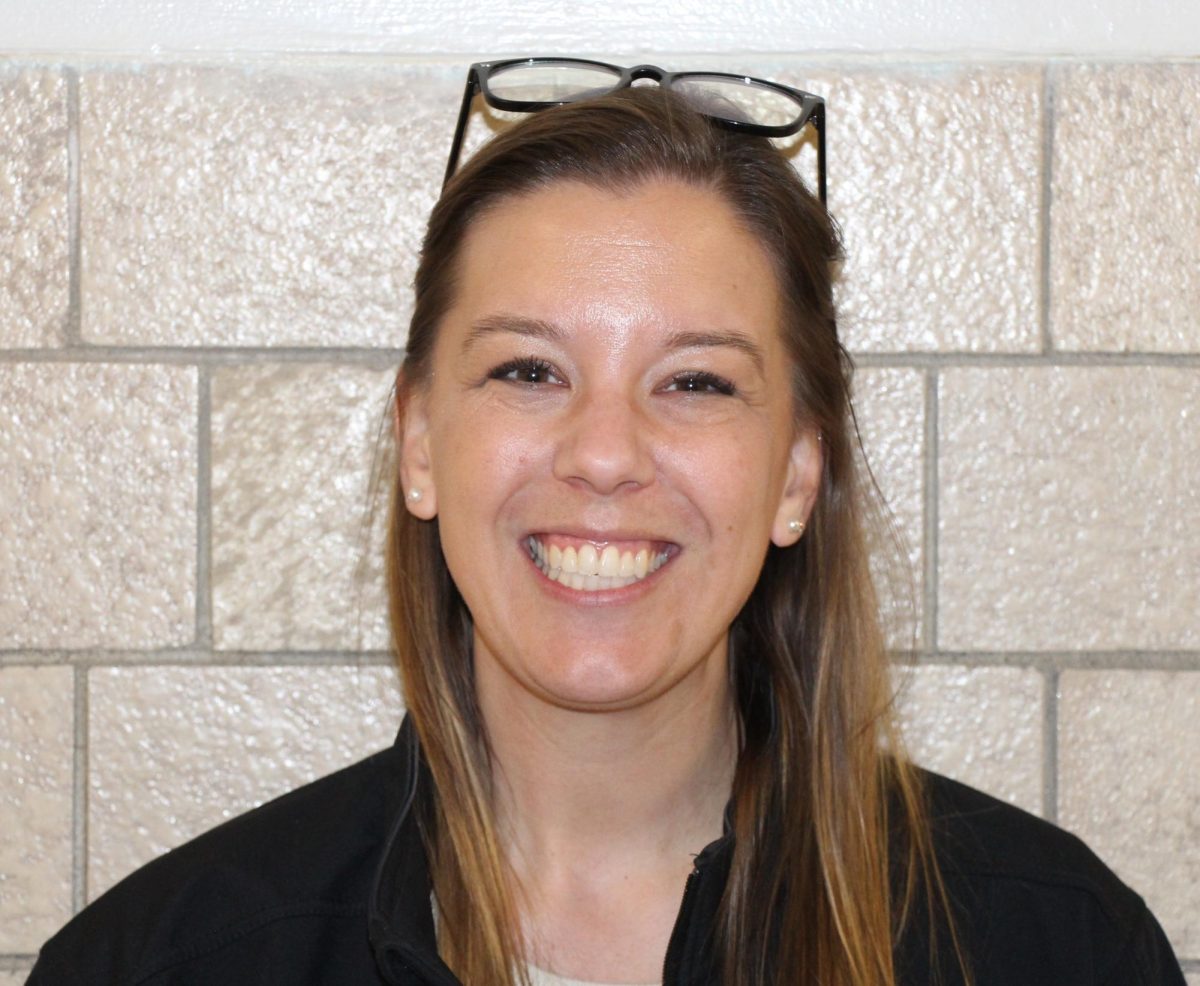
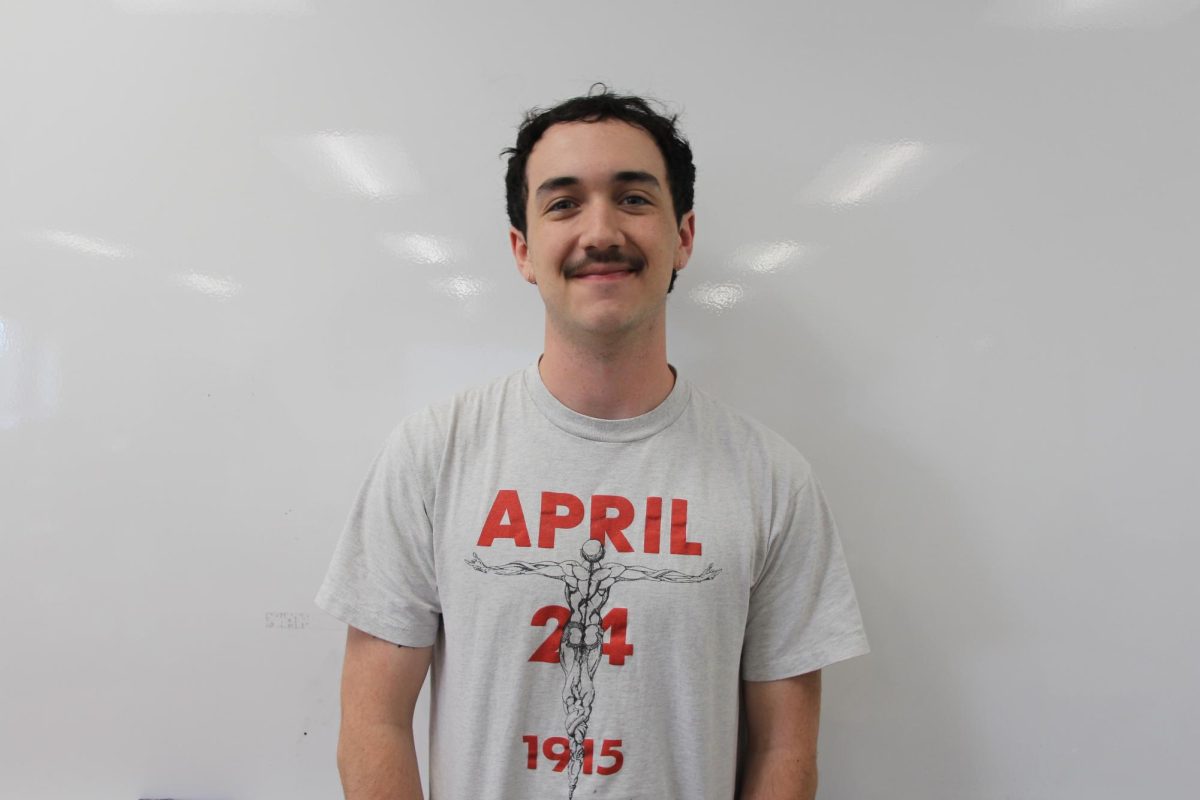
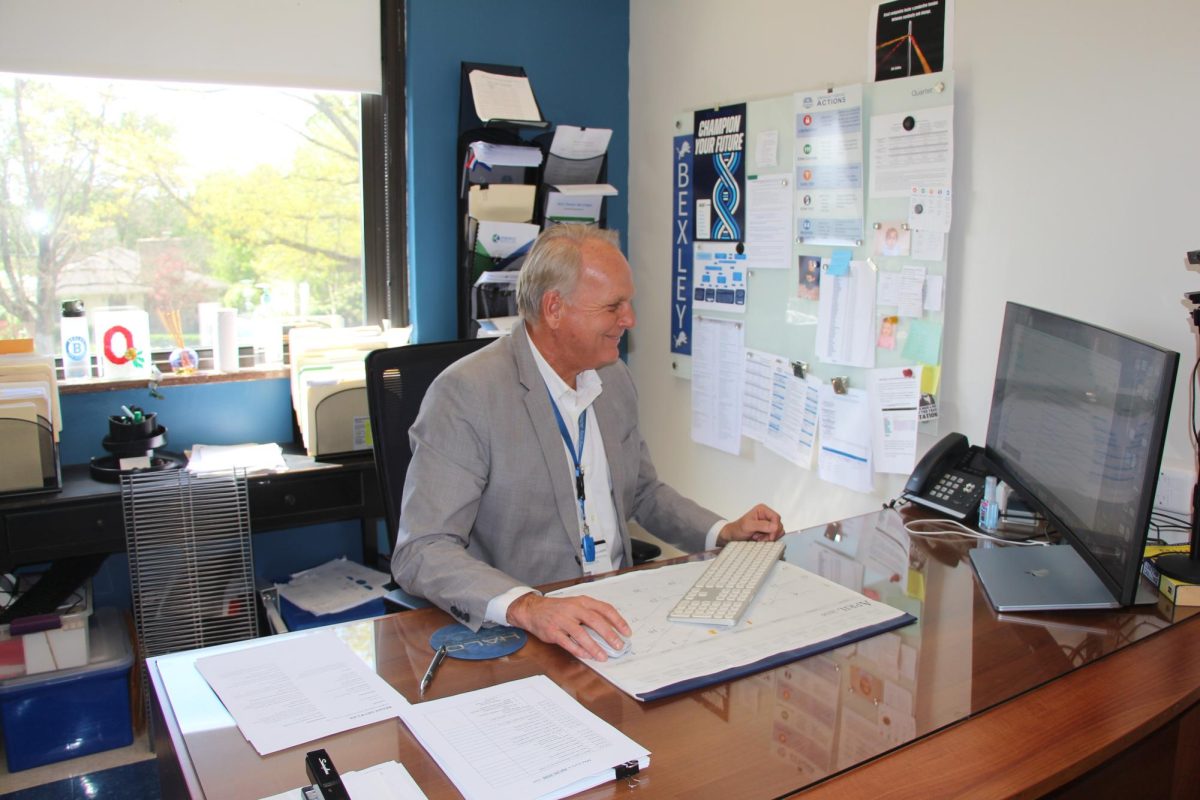




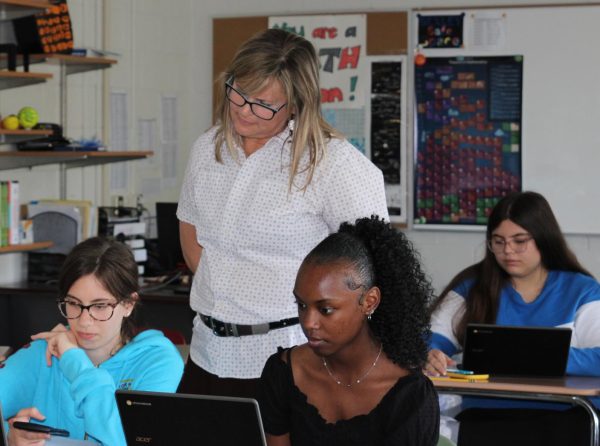
Math Teacher Jennifer Kirk
Q: What was your career before you came to Bexley?
A: I was a math teacher at Pickerington Central High School and also coached volleyball there.
Q: What made you come to Bexley?
A: I’ve known [Montrose Elementary Principal] Nyesha Clayton for a really long time. And she just randomly texted me, “Hey, Bexley needs a math teacher. Are you interested?”
Q: What classes are you currently teaching and what do you do in the high school?
A: I teach Supported Algebra 1 and Geometry.
Q: Did you have any previous jobs?
A: I’m actually a second-career teacher. Before teaching high school, I taught preschool. Before that, I used to work at doctors’ offices. I did medical billing and that kind of thing.
Q: How did you know you wanted to become a teacher?
A: I would make worksheets for my little sister when I was in elementary school and make her do math facts.
Q: How have your first couple weeks been at Bexley?
A: Really good. There are lots of new things you need to learn, but I think it’s been going great.
Q: What do you want to teach or do here in the future?
A: I would like to teach Honors Geometry. But honestly, the way the math department works is wherever there’s a hole, we just fill it and it seems to work. So I’m open to whatever. I’m a team player.
Intervention Specialist Krupa Shah
Q: What was your career before you came to Bexley?
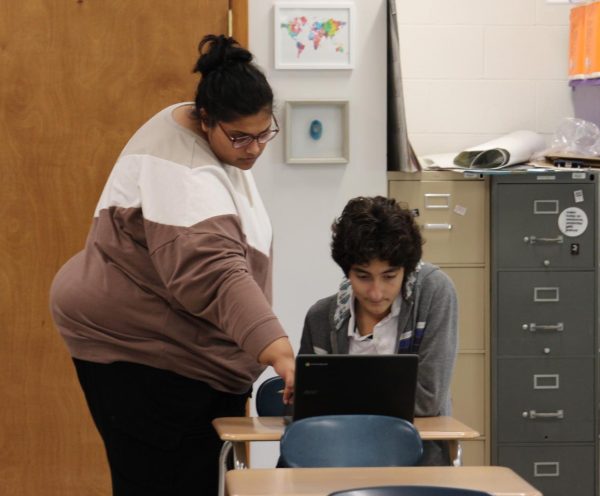
A: I was at the middle school in Reynoldsburg City Schools as an Intervention Specialist. I worked in the Behavior Unit for one year, where I worked with students who need support with regulating their emotions. I would teach them coping mechanisms on how to express their emotions in a productive manner. The two years before that, I was a co-teacher in English.
Q: What made you come to Bexley?
A: I went to Capital University, so I already was very familiar with the community, and then student teaching here, I had friends like CMac (athletic coordinator Carleton McGrady) and Ms. Frenz (intervention specialist and special services department chair]. I knew all of them already, so I already had a connection here. I also wanted to be able to grow as a teacher, and I knew Bexley was a place where I could do that.
Q: What classes are you currently teaching and what do you do in the high school?
A: We break down concepts for students who have identified learning disabilities in a way that their brain can understand. With dyslexia, your brain comprehends things differently. So there’s a different way of teaching the same material. It’s really just teaching those foundational skills in the way that their brain can process them.
Q: Did you have any previous jobs?
A: Right out of college, I went to Reynoldsburg, and I actually student-taught in Bexley while I was in college. And then I got the job at Reynoldsburg and found my way back here.
Q: How did you know you wanted to become a teacher?
A: Ever since middle school, I would always go to the tutoring rooms and help out there. I would work with multiple disability classrooms. In high school, I would use my study hall to tutor my friends. I really enjoyed being able to help them learn things and help others become a better version of themselves.
Q: How have your first couple weeks been at Bexley?
A: They’ve been good. I have learned a lot about the community and the students, but I’ve also gotten a lot of opportunities to grow as a teacher, which is what I was looking for.
Q: What do you want to teach or do here in the future?
A: I would like to continue to grow in my field but also get my license in becoming an administrator, and I see myself in an admin role at some point.
Intervention Specialist Nora O’Donnell
Q: Why did you decide to come to Bexley?
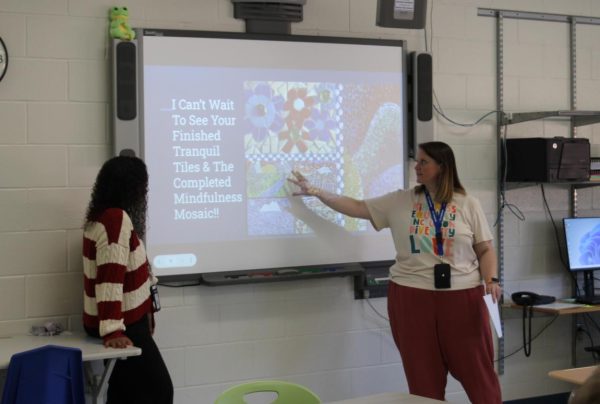
A: It had a really good reputation as a school district with great community support and involvement. When I think about where I want to spend the majority of my career, I want to retire from a place where the community is interested in seeing the students do well.
Q: How is Bexley compared to where you had been previously?
A: I think size is a big difference. I’m dedicated to education and want to continue learning, but I think Bexley is another community where they really focus on putting the students first. Not every school that I have been at has that focus.
Q: How did you decide to get into this job?
A: I had been a high school teacher, and then I became a mental health counselor. I was just going to go into private practice and be a mental health counselor, and when school got out in May or June last year, I was going to open my own office. Around this time in October, I was kicking myself. I missed the school community, the spirit weeks and students interacting. So, I became a paraprofessional at Maryland Elementary. Then this job opened up and it combines a lot of my past experiences: working with mental health, credits, and making sure students are on track to graduate.
Q: How do you like Bexley? What is your favorite thing about it?
A: I’m a sports fan. I haven’t made it to any games yet, but every time I come in the building, I stop and I think that I’m probably one of the only teachers who stops and looks at those TV screens, just watching all the still shots from the previous night’s or week’s games. I’m always looking for students that I recognize.
Q: Did you have any new experiences at Bexley?
A: Everyone is just wonderful about giving answers. It’s more than just an answer–I think people really go out of their way to make sure that newcomers feel welcome.
Q: What is your favorite thing to teach?
A: In this role as an intervention specialist, I’m trying to make students more resilient. Like how you lift weights for a sport, or you do strength training, we’re trying to build the muscles.
Q: Is there anything else you would like to teach in the future?
A: I like this position as the intervention specialist. I’m sort of committed to education and being a lifelong learner. I don’t want to be a principal or an administrator. I would love to be able to mentor new, younger teachers or intervention specialists and support students who come back.
English Teacher Alexandra Lubarsky
Q: Why did you decide to come to Bexley?
A: It was actually halftime at a Columbus Crew game, and I got a text from Melissa Klosterman-Lando. I’d met with her a year ago and there weren’t any positions last year, but she was like, “Hey, we’re posting a position in the English department tomorrow, so I thought I’d put it out there in case you want to apply.” And I did.
Q: How is Bexley compared to where you had been previously?
A: The staff here, the English department and the administration are all really, really supportive. The school is just very well run. I think everyone is very inspired, and that’s something that is refreshing for me. I think that kind of larger structure is different.
Q: How did you decide to get into this job?
A: I always knew I wanted to help people and do good in the world around me. I applied as a nursing major. I showed up at nursing orientation, and they said, “We want to help you achieve all your nursing goals and dreams.” I walked right out of there and I said, “Mom, I don’t have any nursing goals and dreams.” I hate blood and I’m not a science person, so it just wasn’t for me. I changed my major then and there. I always loved English in high school. AP Lang and AP Lit were my favorite classes. I knew that through education I could still achieve that purpose of doing good in the world around me.
Q: How do you like Bexley? What is your favorite thing about it?
A: I love it. I need to explore it more. I really want to go to the Drexel Theater. It looks so cute. My favorite spot now in Bexley would be Kitties.
Q: Did you have any new experiences at Bexley?
A: I’m Jewish, so coming to a community where there is a large Jewish population has been really cool. I was born in Santa Monica, and here I found somewhat of a Jewish community at Ohio State. I was involved with the Hillel, but outside of that, I never really found that. It’s really cool to be a part of that here.
Q: What is your favorite thing to teach?
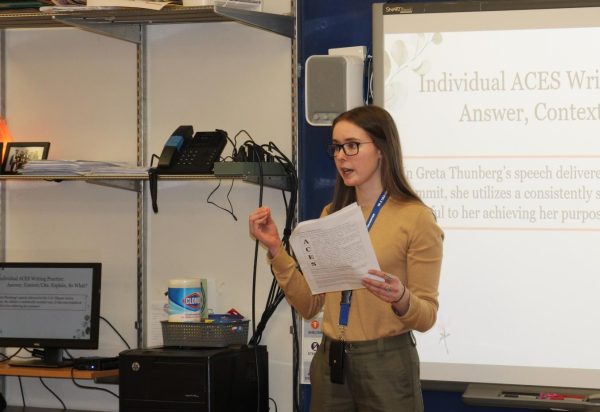
A: Poetry. I think a lot of times students will come in with the idea of, “I don’t like poetry” because they have this idea that it’s boring old white men, and it’s dense and you can’t understand it. My approach is largely showing the similarities between music and poetry. All of our favorite rap artists are poets. There’s a lot of that crossover. We’ll analyze a lot of music and see those figurative language devices and work on using it as an outlet to express ourselves and express our emotions.
Q: Is there anything else you would like to teach in the future?
A: I would love to teach an elective class that is all about poetry and creative writing. But beyond that, as cliche as it sounds, I think I’m living the dream.
Published and digitized October 2025.