
















More than 90 years before today’s students walked the halls, the buildings that now make up the Cassingham Complex were already shaping public education in Bexley.
According to the Bexley Historical Society, the site that would become the Cassingham Complex did not originally function as a unified campus. In the early 20th century, Bexley students attended classes in separate elementary and secondary school buildings located throughout the city.
Records from the Bexley Historical Society show some students attended Pleasant Ridge School, a two-room schoolhouse built in 1875, while others went to Bullitt Park School on East Main Street. As enrollment increased,
those facilities became overcrowded, prompting the district to select a central site for new school construction. The district then chose to build outwardly, gradually transforming the site into a K-12 campus that now includes an elementary, middle and high school.
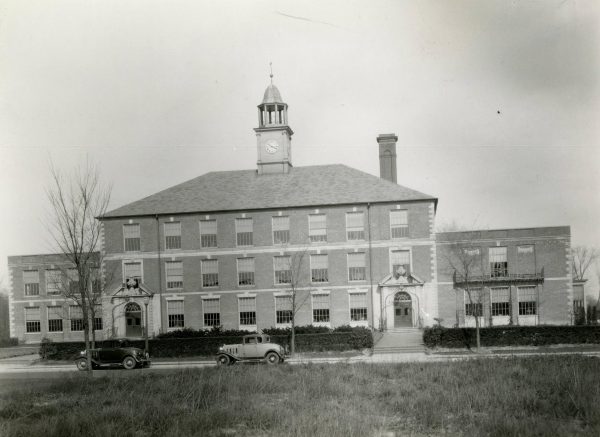
As Bexley’s population continued to grow, the district expanded its facilities again. The building that now houses Montrose Elementary School was opened in 1922 and originally served as the high school, according to the Bexley Historical Society. Prior to Montrose’s construction, high school students attended East High School in Columbus.
When the current high school on Cassingham Road opened in 1932, Montrose was converted into an elementary school to meet the rising demand for elementary education in the school district, according to historical records.
Vice President and trustee of the Bexley Historical Society Larry Helman said Montrose was intentionally designed to project permanence and importance.
“It is classical in a form typical of important civic buildings of that time,” Helman said.
He added the building’s prominent front gable and columns were meant to reflect the community’s educational values.
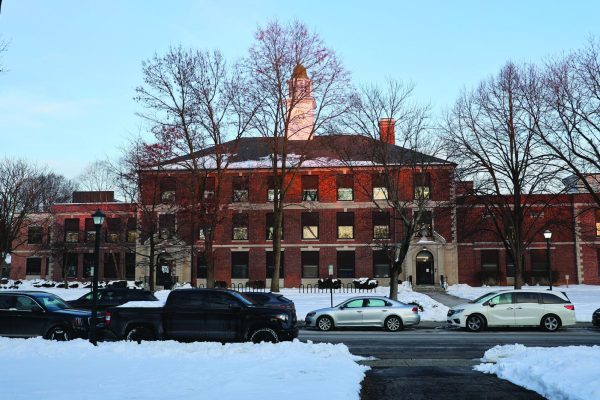
“The goal was to create an impressive, timeless building facade that reflected the Bexley community’s commitment to the value and importance of public education,” Helman said. Cassingham Elementary School opened in 1927 to relieve overcrowding at other schools, according to the Bexley Historical
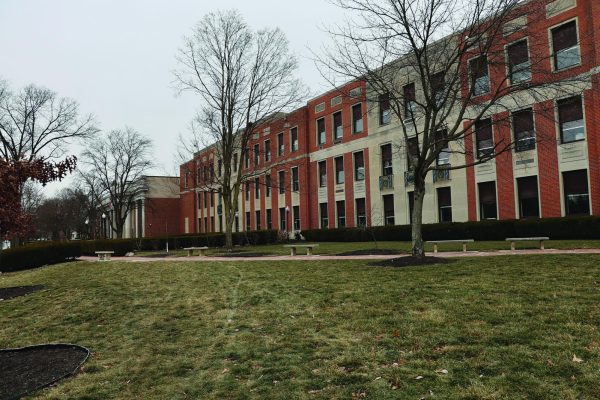
Society. The building was designed in a Georgian Revival architectural style that reflected both its civic importance and its residential surroundings.
Helman said the building’s design emphasized balance and restraint.
“The shape and form of the building is elegant in its simplicity, materials and proportions,” he said.
Helman explained the clock tower was intended to serve as both a functional and symbolic feature of the building.
“While adding a bit of functionality in telling time, it is also a great design feature,” he said. “It provides both an illuminated landmark and possibly a subtle message of the importance of time in investing one’s education.”
In the school’s early years, Cassingham played a role beyond the classroom, Bexley Historical Society representative Nancy Beck said. A large white arrow was painted on the roof of Cassingham Elementary, she explained, to point pilots toward Port Columbus Airport.
“It was an early navigational aid for pilots,” Beck said.
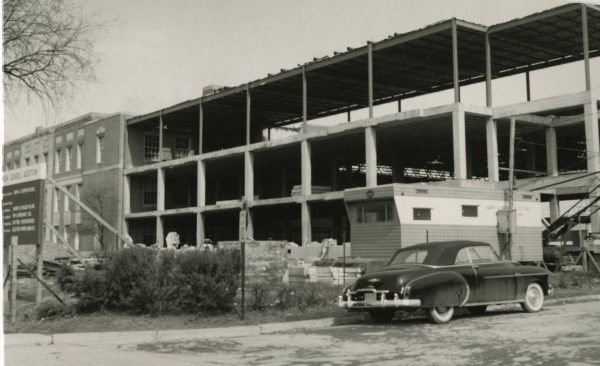
Over the following decades, additional buildings were constructed in the area, including Maryland Elementary School in 1950. The middle school building was added to the Cassingham site in 1960, with later expansions connecting the campusveven further. According to the Bexley Education Foundation, these changes gradually shaped the area into the unified complex that serves students today.
While the complex has undergone renovations and additions, Director of
Facilities and Operations Harley Williams said district leaders have made conscious decisions about what should and should not be altered. Williams
explained community feedback plays a major role in shaping renovation priorities.
“Don’t touch the Montrose facade,” he said. “Don’t touch the Cassingham clock tower.”
Williams explained those features were viewed as essential to preserving the identity of the complex.
When renovations were required, the district focused on maintaining the origi nal character and aesthetic of the campus rather than recreating older designs, Williams said.
Business Manager John Eikenberry said this approach was especially important during renovations to the middle school in 2003.
“We tried to emulate original materials and architectural details rather than directly copy them,” he said.
Eikenberry explained decisions about brick color, roofing materials and exterior features were made to ensure newer construction blended with the older buildings while still meeting modern needs.
Williams said the complex expanded to include specialized learning spaces in the second half of the 20th century. The science wing was added from 1991-1992, and additional labs and classrooms were added during major renovation periods to support evolving curricula, Williams said.
Construction on the arts wing and main entrance began in 2001, Williams explained. He said it was the main addition to the complex that was built with the intent to transfer historic details from the old building.
Williams added maintaining aging infrastructure, including boilers and flat roofs, requires ongoing planning and investment.
“People tend to jump straight to the design and not the planning,” Williams said.
He said the district is currently focused on long-term planning rather than architectural design, noting specific design details will only be developed if voters approve funding.
This approach ensures future improvements remain financially sustainable while respecting the complex’s historical character, Williams added.
Reflecting on the district’s responsibility to preserve the campus, Williams said the buildings stand as a reminder of earlier generations’ priorities.
“The people who built these schools 100 years ago invested in quality buildings for future generations,” he said. “Now the district sees itself as responsible for doing the same for the next 100 years.”
Published and digitized February 2026.