




























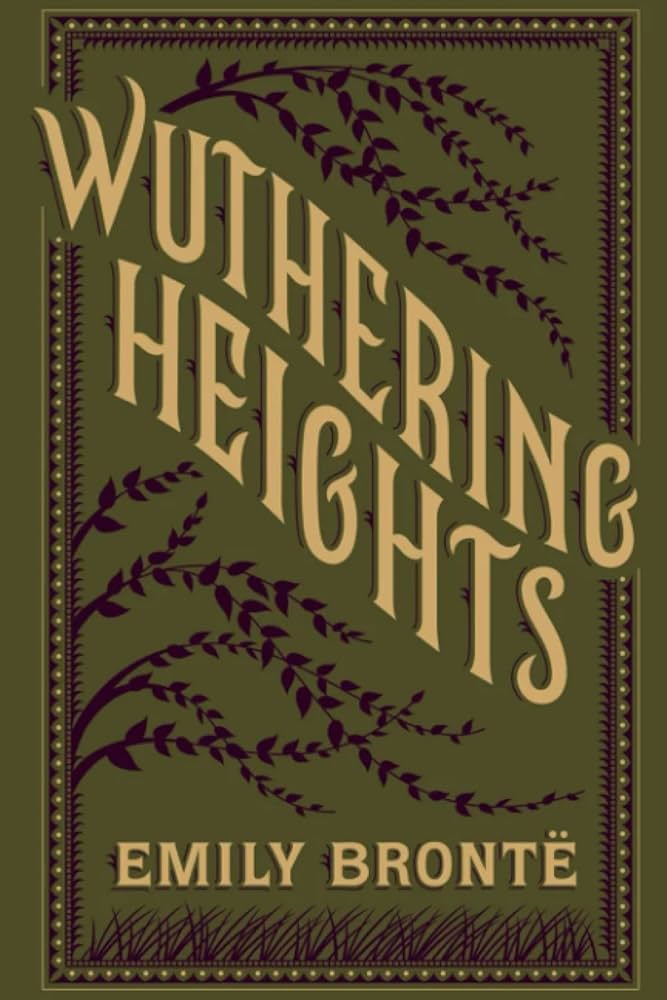
The novel “Wuthering Heights” by Emily Brontë is an iconic piece of gothic English literature whose eerie setting and obsessive characters gave me goosebumps.
The book takes place in early 1800s England and is narrated by Lockwood, a wealthy man from London who is learning about the decade-long drama from the housekeeper, Nelly Dean. Dean witnessed the tragic love story of Catherine and Heathcliff and later watched their children’s romance unfold. Catherine, a strong-willed girl, and her adopted Roma brother Heathcliff have an obsessive, unhealthy relationship that eventually leads to their demise.
When I began the novel, I thought Catherine and Heathcliff would end up together, but I was extremely wrong. Despite their relationship being built on a mutual, desperate need for each other, Catherine chose to marry rich instead of following her heart and being with Heathcliff. I appreciated this, as it accurately portrays how social class and poverty can affect romantic feelings, especially in the 19th century.
Catherine and Heathcliff have an incredibly toxic relationship, enough that Heathcliff plans to take revenge on Catherine after she marries Edgar Linton. Catherine has to pick between her devoted husband and spirited childhood lover, making for a heated love triangle that kept me hooked.
Heathcliff goes to great lengths to be with Catherine, even digging up her grave to face his own. This highlights Heathcliff’s obsession with Catherine, a fixation that sent shivers down my spine. While Catherine and Heathcliff’s love may not have been the sweetest, it was fascinating to see their powerful story unfold.
Brontë’s description of the scenery in the novel adds to the mysterious mood. I loved that
Wuthering Heights, the Earnshaw residence, is completely disorderly; the foggy moors and bad weather add to the foreboding mood. The characters are trapped in their own misery, including Catherine, who is confined to order and rules at Thrushcross Grange with Edgar instead of being her true self at her home, Wuthering Heights.
When the novel isn’t focused on Catherine and Heathcliff’s forbidden love, it loses all its spark. The second generation’s storyline is far less intense, as Heathcliff’s son, Linton, is forced by his father to manipulate Catherine’s daughter, Cathy, into marrying him.
Linton constantly irritated me; he lacks his father’s fearlessness and is a big whiner. Cathy is also insufferable, mocking her cousin Hareton’s lack of education and representing a less complex version of her mother.
Reading “Wuthering Heights” felt like watching a combination of an intense reality show and a riveting thriller. The novel’s themes of love and revenge are timeless, and it is definitely worth the difficult read.
Published and digitized March 2026.